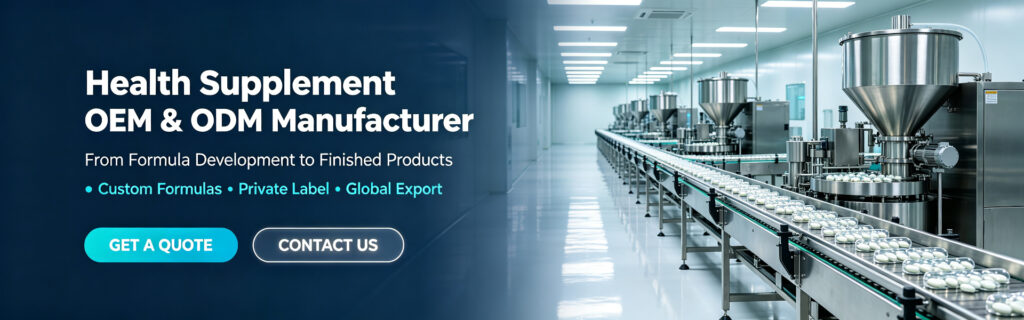
As the global dietary supplement industry continues to expand, more entrepreneurs, distributors, retailers, and wellness companies are entering the market with private label and custom-formulated products. While branding and marketing play important roles in product success, selecting the right OEM supplement manufacturer is often one of the most critical decisions a company can make.
A manufacturing partner directly influences product quality, development timelines, supply chain stability, and long-term brand reputation. For businesses looking to build sustainable growth, understanding how to evaluate potential manufacturing partners is essential.
This guide explores the key factors brands should consider when choosing an OEM supplement manufacturer.
Understand Your Business Goals First
Before evaluating manufacturers, companies should clearly define their own objectives.
Important questions include:
- Are you launching a new supplement brand?
- Do you need stock formulas or custom formulations?
- Which markets will you target?
- What dosage forms will you offer?
- What production volumes are required?
Having clear answers helps narrow the list of potential manufacturing partners and improves communication during the supplier selection process.
Different manufacturers specialize in different capabilities, making alignment an important first step.
Evaluate Manufacturing Experience
Experience remains one of the strongest indicators of manufacturing reliability.
Established manufacturers typically offer:
- Proven production processes
- Quality management systems
- Industry knowledge
- Technical expertise
- Supply chain stability
Companies with extensive industry experience often understand regulatory expectations, market trends, and product development challenges more effectively.
Long-term manufacturing experience can also reduce operational risks during product launches.
Verify Quality Certifications
Quality assurance should always be a top priority when selecting a supplement manufacturer.
International buyers often look for certifications such as:
GMP Certification
Demonstrates adherence to Good Manufacturing Practices.
ISO Quality Systems
Supports process consistency and quality management.
HACCP Programs
Helps identify and manage production risks.
Additional Industry Certifications
Depending on business requirements, other certifications may also be valuable.
Manufacturers maintaining recognized certifications often provide greater confidence regarding production standards and operational consistency.
Review Research and Development Capabilities
Innovation plays a major role in today’s supplement industry.
Brands seeking differentiation should evaluate whether a manufacturer offers:
- Formula development
- Ingredient research
- Product optimization
- Market trend analysis
- Technical consultation
Strong research and development capabilities can significantly accelerate product development while supporting long-term innovation.
This is especially important for brands pursuing customized formulations rather than standard private label products.
Assess Product Portfolio and Dosage Form Options
A versatile manufacturing partner can provide greater flexibility as product portfolios expand.
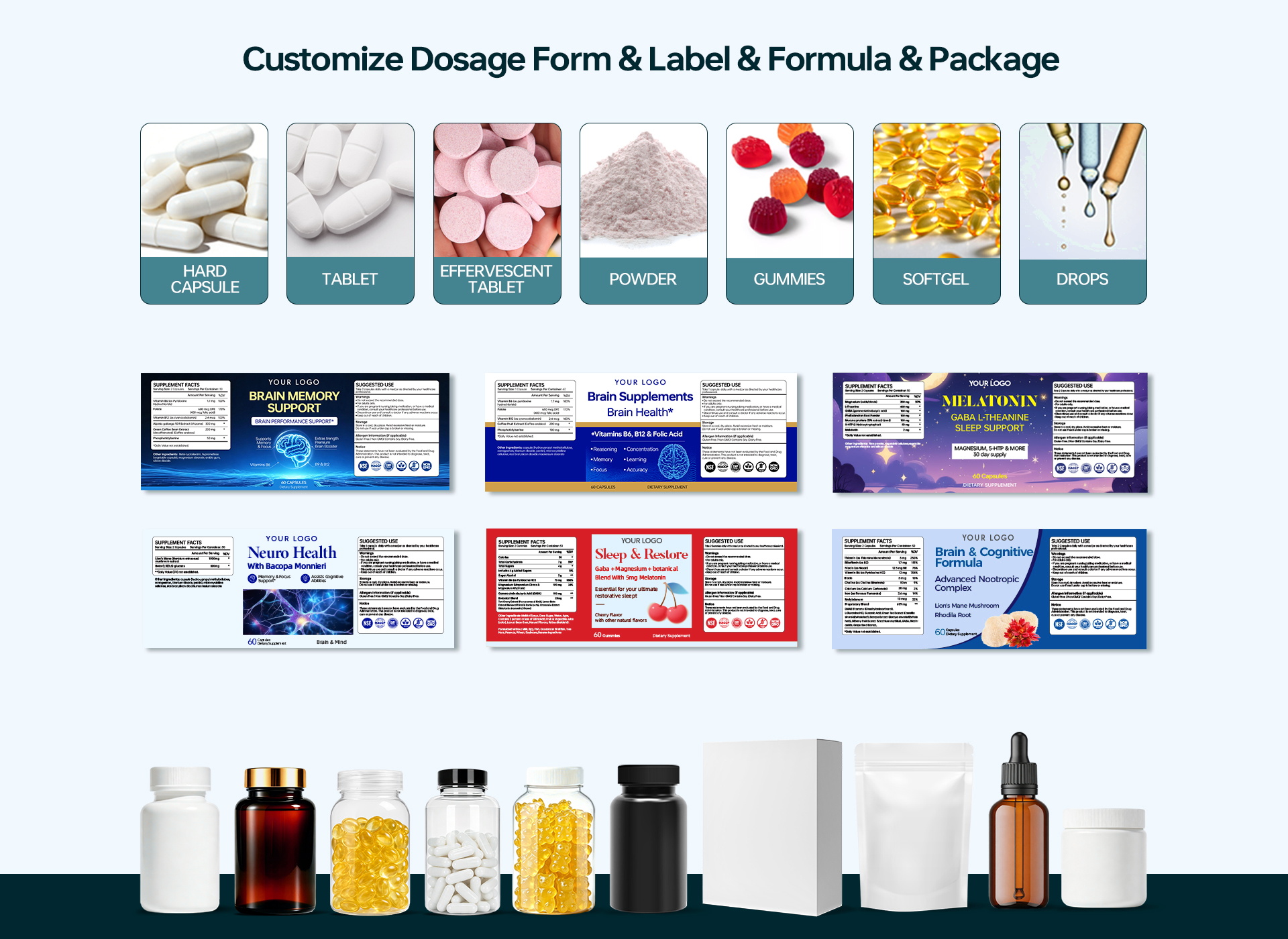
Common dosage forms include:
- Capsules
- Tablets
- Gummies
- Powders
- Effervescent tablets
- Liquid supplements
Working with a manufacturer capable of producing multiple formats simplifies future product expansion and helps maintain operational consistency.
Consider Customization and Private Label Services
Many supplement brands require more than basic manufacturing support.
Comprehensive OEM and ODM services may include:
- Formula customization
- Packaging design
- Label development
- Documentation support
- Logistics coordination
Manufacturers offering one-stop solutions can streamline operations and reduce supplier management complexity.
This integrated approach is particularly beneficial for growing brands with limited internal resources.
Evaluate Production Capacity
Manufacturing scalability is another important consideration.
A suitable partner should be capable of supporting:
- Initial product launches
- Seasonal demand increases
- Business expansion
- International market growth
Production capacity should align with both current requirements and future business objectives.
Choosing a manufacturer that can scale alongside your brand helps avoid supply chain disruptions as demand increases.
Communication and Project Support Matter
Strong communication can significantly improve project outcomes.
Brands should evaluate:
- Response speed
- Technical support availability
- Project management capabilities
- Documentation processes
- International business experience
A responsive manufacturing partner can help reduce delays and improve overall operational efficiency.
Clear communication becomes especially important when managing custom formulations and international distribution.
How Orange Vita Supports Global Supplement Brands
Orange Vita provides comprehensive OEM and ODM supplement manufacturing solutions for brands worldwide.
Supported by Guangzhou Meichuntang Biotechnology Co., Ltd., the company offers customized formula development, packaging solutions, private label manufacturing, and logistics support. The company maintains a formulation library exceeding 20,000 proprietary formulas and provides one-stop services designed to support diverse business requirements.
The manufacturing facility has more than 17 years of industry experience and maintains internationally recognized certifications including GMP, NSF, ISO9001, ISO22000, and HACCP. Multiple production lines support capsules, tablets, powders, liquids, drops, and effervescent tablets, providing flexibility for growing supplement brands.
Looking Ahead
Choosing the right OEM supplement manufacturer is about more than production capacity alone. Quality systems, formulation expertise, customization capabilities, communication, and long-term scalability all play important roles in building successful supplement brands.
Companies that invest time in evaluating manufacturing partners carefully are better positioned to launch high-quality products, strengthen customer trust, and achieve sustainable growth in increasingly competitive global markets.