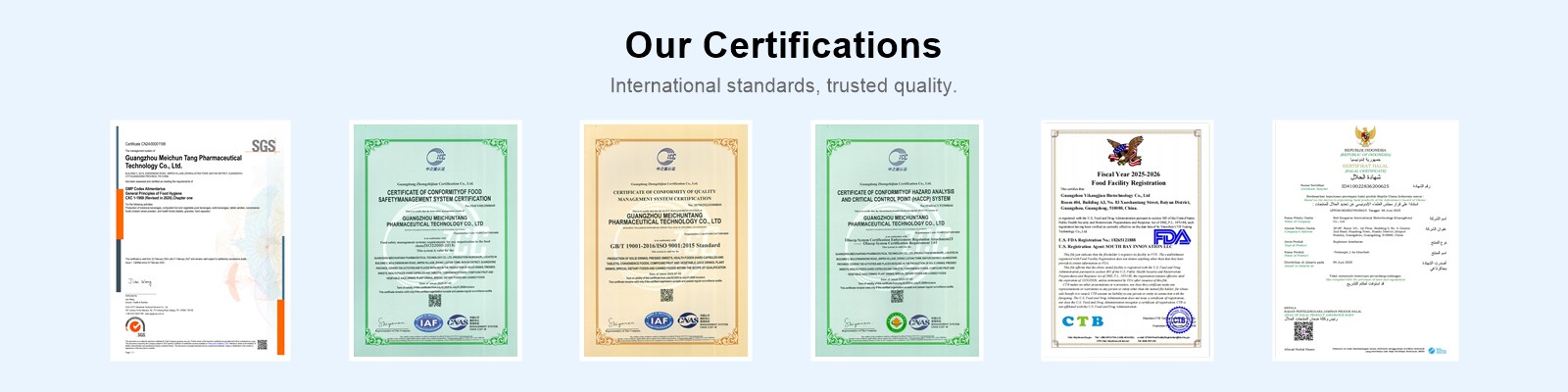
Choosing a dietary supplement manufacturer involves more than comparing quotations, minimum order quantities, and production capabilities. For supplement brands, importers, wholesalers, and distributors, manufacturing quality and product documentation are important parts of supplier evaluation. Clear documentation helps buyers understand product specifications, review relevant quality information, and establish expectations before placing an order.
For businesses developing private label supplements, the goal is not simply to collect as many certificates as possible. It is to determine whether the manufacturer can provide appropriate, current, and product-relevant information to support the intended project and target market.
1. Understand the Manufacturer’s Quality Management System
Before selecting an OEM supplement manufacturer, buyers should ask how the supplier manages quality throughout its manufacturing operations. Relevant questions may cover incoming materials, production procedures, in-process checks, finished product review, recordkeeping, and the handling of deviations.
A quality management system provides a framework for managing these activities. However, the existence of a documented system does not automatically establish that every product meets every buyer’s requirements. Buyers should understand what the system covers and how it applies to the specific facility, product, and manufacturing activities involved.
When evaluating a supplier, consider asking:
- What quality management procedures apply to the proposed product?
- How are raw materials identified and checked before use?
- How are approved product specifications maintained?
- What records are created during manufacturing?
- How are nonconforming materials or products handled?
- What quality documents can be provided for the finished product?
The answers should be specific enough to help you understand the supplier’s process. If a response is unclear, request clarification before moving forward.
2. Verify Certifications and Their Scope
Manufacturing certifications can form part of supplier qualification, but buyers should verify the details instead of relying only on logos displayed on a website or brochure.
Ask for a current copy of the relevant certificate and review the issuing organization, certificate holder, facility address, validity period, and scope. Where appropriate, verify the certificate with the issuing body or its official certification database.
Different standards and certifications address different requirements. A certificate covering a manufacturing facility does not necessarily mean that every finished supplement has received an independent product certification. Similarly, a supplier’s general statement about certification should not replace review of the actual document.
Buyers should also distinguish between a certificate, an inspection record, a laboratory report, and a product specification. These documents serve different purposes and should not be treated as interchangeable.
For international sourcing, it is useful to ask whether the supplier’s documented quality arrangements are appropriate for the intended product and destination market. Importers may need additional review depending on their responsibilities and the applicable regulations.
3. Request Product Specifications and Ingredient Information
Product specifications describe the agreed characteristics and requirements of a particular product or ingredient. They help the buyer and manufacturer establish a shared reference for what is being purchased.
For a dietary supplement, relevant specifications may include the ingredient list, ingredient amounts, dosage form, serving information, appearance, and other characteristics appropriate to the product. The exact details depend on the formulation and agreed requirements.
Before approving a product, compare the specification with the formula and label information. Confirm that ingredient names, amounts, serving sizes, and other important details are consistent across the documents.
Ingredient documentation may also be relevant. Depending on the ingredient and project, buyers can ask whether the supplier has available specifications, supplier documentation, or other supporting records. Any document received should be reviewed for the ingredient identity, applicable parameters, document date, and source.
Avoid assuming that one generic specification can cover every ingredient, formulation, or production batch. Ask the manufacturer to clarify which document applies to your product and whether it represents a general specification or a particular lot.
4. Understand Certificates of Analysis and Testing Records
A Certificate of Analysis (CoA) typically reports results for specified tests against stated criteria. Buyers may request a CoA for relevant raw materials or finished products, depending on the product, agreement, and applicable requirements.
When reviewing a CoA, check whether it identifies the relevant material or product, batch or lot number where applicable, tests performed, reported results, acceptance criteria, and issuing laboratory or responsible party. Also review the document date and determine whether the reported results relate to the lot being purchased.
A CoA should not be interpreted as proof of every possible quality attribute. Its meaning depends on the tests included, the methods used, and the scope of the report.
If independent laboratory testing is important to your procurement requirements, clarify who conducts the testing, which parameters are tested, and whether the laboratory’s qualifications are appropriate for the work. Do not assume that every supplier automatically conducts every possible test or that all testing is performed by an independent third party.
For products intended for a regulated market, buyers should establish which testing and documentation are required for their specific product rather than relying on a generic checklist.
5. Ask How Batch Traceability Is Managed
Batch traceability helps connect a product with relevant production records and, where applicable, material and distribution records. It can be important when investigating a quality concern, responding to a customer inquiry, or determining which products may be affected by an issue.
Buyers should ask how batches are identified and how relevant records can be retrieved. Questions may include:
- Is each applicable production batch assigned a unique identifier?
- Can the finished product be linked to relevant manufacturing records?
- How are batch numbers shown on product packaging or shipping documents?
- What process applies if a quality issue is reported?
- What records are available to support an investigation?
The precise traceability arrangements depend on the supplier’s system, product, and applicable requirements. Buyers should confirm the process directly and document any expectations in the purchase agreement or quality agreement.
For repeat orders, retaining purchase orders, approved specifications, batch information, and applicable quality documents can also help the buyer maintain consistent internal records.
6. Clarify Quality Responsibilities
Quality management is a shared commercial concern, but the responsibilities of the manufacturer, brand owner, importer, and distributor may differ.
Before production begins, establish which party is responsible for approving the formula, reviewing label artwork, confirming packaging specifications, providing agreed documents, and addressing quality complaints. If changes to ingredients, suppliers, specifications, or packaging are proposed, clarify how those changes must be reviewed and approved.
A written quality agreement may be appropriate for some projects, particularly when the product or supply arrangement involves more complex requirements. At a minimum, the purchase documentation should clearly identify the approved product specifications and the documents the supplier has agreed to provide.
Buyers should also establish how issues are communicated, what information is required when reporting a problem, and how responsibilities for investigation and corrective actions are determined.
Clear expectations help avoid disputes caused by assumptions about testing, documentation, or product acceptance.
7. Evaluate Documentation in the Context of Your Target Market
Product documentation should be assessed against the product’s intended destination and distribution model. Requirements can differ across jurisdictions, product categories, ingredients, and claims.
A document that is useful for internal supplier evaluation may not, by itself, satisfy a regulatory filing, customs requirement, retailer requirement, or market-specific obligation. Buyers should identify their actual requirements before requesting documents and confirm whether additional information is necessary.
For example, a brand planning to sell through multiple countries should review the applicable ingredient restrictions, labeling rules, and import responsibilities for each market. The manufacturer may be able to provide technical information or agreed supporting documents, but buyers should not assume that a standard supplier document package guarantees regulatory compliance.
Where necessary, consult qualified regulatory professionals familiar with the destination market and product category.
Working With an OEM Supplement Manufacturer
Guangzhou Meichuntang Biotechnology Co., Ltd., associated with Orange Vita, describes its business as including OEM and ODM services, customized formulas and packaging, and production across several dosage forms. Its company introduction also lists manufacturing-related certifications and quality credentials. Buyers should request current supporting documents and verify their scope, validity, and relevance to the specific project.
When evaluating Orange Vita or another potential supplier, prepare a clear list of the product specifications and documents required for your project. Confirm which items are available, which need to be arranged separately, and which responsibilities remain with your business.
A structured supplier review is more useful than comparing certification logos alone. It helps buyers evaluate the information that matters for the actual product, order, and target market.
Final Thoughts
Manufacturing quality and product documentation are essential considerations when selecting a dietary supplement supplier. Reviewing the quality system, verifying certifications, checking product specifications, understanding testing records, and clarifying batch traceability can help buyers make better-informed sourcing decisions.
Before placing an OEM or private label order, establish the product requirements, identify the documents you need, and confirm the supplier’s responsibilities in writing. A clear process supports better communication and helps create a more reliable foundation for long-term supplier relationships.