
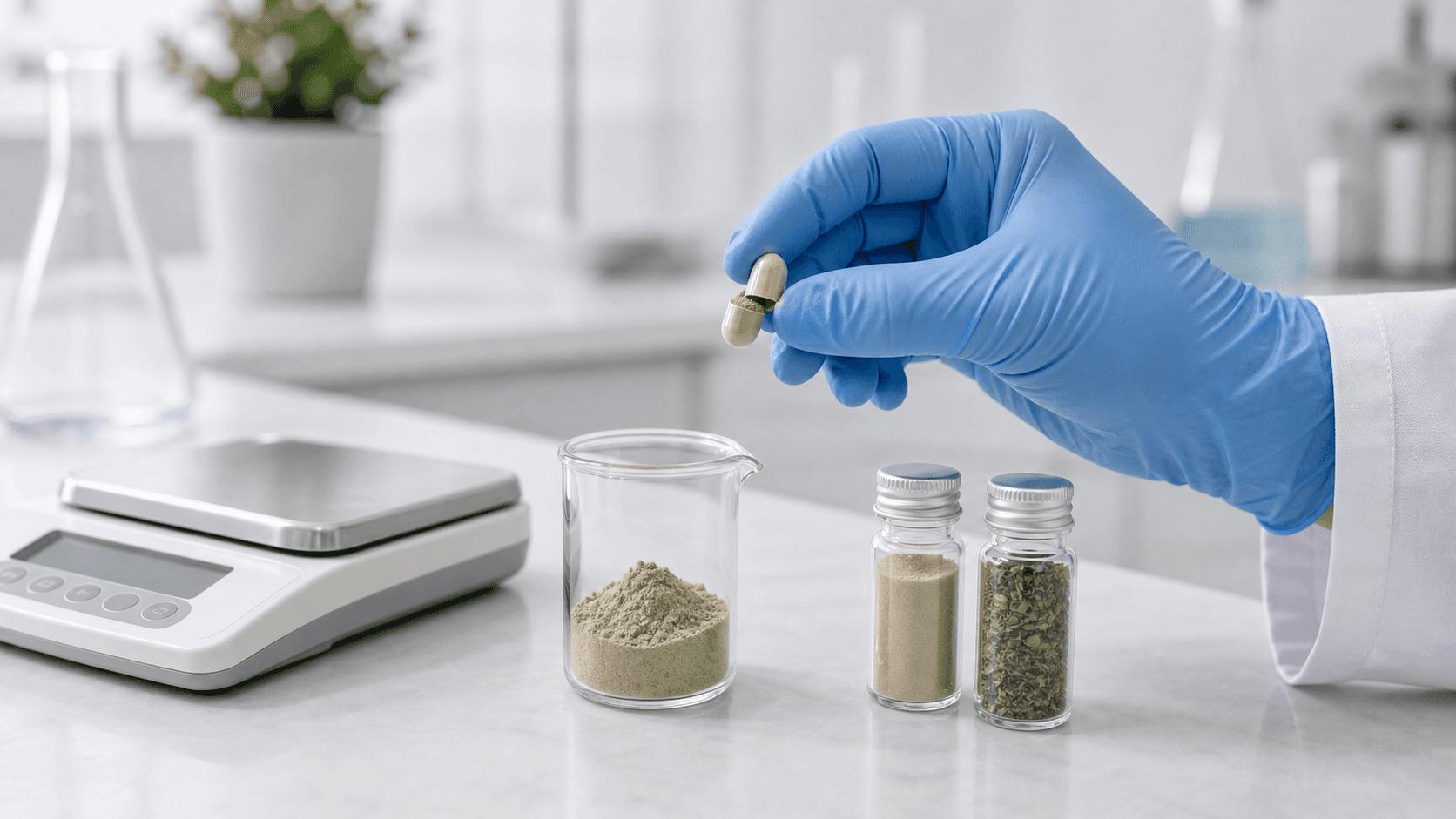
Launching a dietary supplement brand involves more than choosing a product and adding a label. Buyers need to coordinate product positioning, ingredient selection, dosage form, packaging, manufacturing requirements, quality documentation, and delivery expectations. For many businesses, working with an experienced OEM supplement manufacturer can help organize these tasks into a clearer product development process.
Whether you are an established distributor expanding your product range or a startup building a private label supplement brand, understanding each stage of OEM supplement manufacturing can help you communicate more effectively with suppliers, manage project expectations, and reduce avoidable delays.
1. Define Your Product Concept and Target Market
The first step is to establish what you want to develop and who will buy it. Before contacting a supplement OEM manufacturer, prepare a basic product brief that explains your target customers, sales channels, intended positioning, and preferred price range.
For example, a brand targeting wellness retailers may prioritize a straightforward daily nutrition product, while an online brand may focus on a distinctive ingredient combination, convenient dosage form, or customized packaging.
Your initial brief should include:
- Target market, such as the United States, United Kingdom, or European Union
- Intended customer group and product positioning
- Preferred ingredients or existing reference formula
- Desired dosage form, including capsules, tablets, gummies, powders, drops, or liquids
- Bottle size, serving count, and packaging preferences
- Target retail price and estimated purchasing volume
These details give the manufacturer a starting point for assessing feasibility. They also help both parties identify questions that need clarification before development begins.
Market research should be conducted separately from manufacturing discussions. Consumer interest, competitor positioning, ingredient restrictions, and local labeling requirements can differ across markets. A product concept that works in one country may need adjustments before it can be sold in another.
2. Discuss Formula Development and Ingredient Requirements
Once the concept is defined, the next stage is to discuss the formula. Some buyers already have a complete formula, while others need assistance developing a customized combination of ingredients.
A buyer with an existing formula should provide ingredient names, target amounts per serving, preferred ingredient specifications, and any available technical documentation. Buyers seeking a new formula should explain the intended product positioning and the ingredients they want to consider.
During this stage, ask the supplier to clarify:
- Ingredient availability and proposed specifications
- Amounts per serving and recommended serving size
- Compatibility of ingredients within the proposed dosage form
- Flavor, color, texture, or other sensory considerations where relevant
- Available documentation and applicable quality requirements
- Potential restrictions in the intended sales market
Formula feasibility should be confirmed before finalizing the label or packaging artwork. Ingredient selection can affect manufacturing suitability, product stability, serving size, cost, and label space.
It is also important to distinguish product development from regulatory approval. A manufacturer may support formula discussions and provide relevant product documentation, but buyers remain responsible for confirming the legal requirements applicable to their brand and target market. Qualified regulatory professionals may be needed for complex products or cross-border launches.
3. Select the Right Dosage Form
The dosage form affects the product experience, packaging, manufacturing requirements, and overall positioning. Common options include capsules, tablets, effervescent tablets, gummies, powders, drops, and liquids.
Capsules may suit products where a measured serving and convenient daily use are priorities. Tablets can be appropriate for compact formats, while powders offer flexibility for drink mixes and larger serving sizes. Gummies may appeal to brands seeking a chewable format, although formulation, taste, texture, and stability need careful evaluation.
Effervescent tablets and liquid formats have their own packaging and handling considerations. The best option depends on the ingredients, intended serving size, target consumer, product specifications, and commercial objectives.
When discussing dosage forms with an OEM supplement manufacturer, ask which formats it can produce for your proposed product and whether the formula needs to be adjusted to suit the chosen format. Do not assume that every factory can manufacture every dosage form.
At this stage, confirm the preliminary serving count, container size, packaging type, and any special handling considerations. These decisions can influence cost estimates and production planning.
4. Review Samples and Confirm Product Specifications
Where sampling is available, the sample review stage helps buyers evaluate whether the proposed product aligns with the agreed brief. A sample should be assessed against defined criteria rather than general impressions alone.
Depending on the product, review points may include appearance, flavor, odor, texture, capsule or tablet characteristics, powder solubility, and packaging suitability. Buyers should also confirm the ingredient list, serving size, and other agreed specifications.
If changes are needed, document them clearly. For example, specify which characteristic should change, what the acceptable result should be, and whether the revision affects the formula, dosage form, packaging, or cost.
Before approving a final sample or specification, both parties should establish which version is being approved. This helps prevent misunderstandings if multiple formula or packaging revisions are involved.
Sample availability, fees, development timelines, and revision policies vary by supplier and project. Confirm these details directly rather than assuming that sampling is always free or that every project follows the same schedule.
5. Finalize Packaging and Label Information
Packaging is both a practical requirement and an important part of brand identity. Private label buyers may choose standard containers and labels or request more customized packaging, depending on supplier capabilities and project requirements.
Common packaging decisions include bottle or pouch type, closure, label dimensions, serving count, language, and outer packaging. Buyers should also confirm whether the manufacturer supports label design, artwork review, or packaging sourcing.
Before artwork approval, verify the product name, ingredient declaration, serving information, net quantity, directions for use, warnings where required, responsible business details, and any mandatory market-specific information. Exact requirements depend on the destination market and product category.
Claims deserve particular attention. Marketing statements about health benefits, ingredients, or product performance should be reviewed for compliance before labels and online listings are finalized. A statement that appears acceptable in one market may be restricted or require different substantiation in another.
Artwork should not be considered final until the relevant product and regulatory details have been checked. Changes made after printing or production preparation may lead to additional cost or delay.
6. Confirm Manufacturing Preparation and Quality Requirements
After the formula, specifications, and packaging have been agreed upon, the project can move toward production preparation. The manufacturer and buyer should align on the purchase order, quantities, approved specifications, packaging components, delivery expectations, and required documentation.
Before placing an order, ask the supplier about its quality management procedures, traceability practices, batch documentation, and the documents it can provide for the specific product. Depending on the market and product, relevant documents may include ingredient specifications, certificates of analysis, or other agreed quality records.
Certifications should be reviewed carefully. Ask for current documents, confirm the issuing organization and validity period, and check the scope to understand which facility or activities are covered. A factory-level certification should not automatically be interpreted as proof that every finished product carries a separate product certification.
Buyers should also agree on how product specifications and any permitted changes will be controlled. Clear documentation helps both sides understand what has been approved and what must be delivered.
7. Coordinate Production, Shipment, and Future Orders
Production timing depends on several factors, including formula readiness, raw material availability, packaging lead times, order quantity, and the manufacturer’s production schedule. For this reason, buyers should request a project-specific timeline rather than relying on a general estimate.
Before shipment, confirm the agreed quantity, packaging configuration, shipping documents, destination details, and responsibilities for freight and customs-related arrangements. Importers should check their own obligations for product entry, labeling, and local distribution.
For repeat orders, retain the approved formula and packaging specifications, order records, and relevant quality documents. Review any changes to ingredients, suppliers, artwork, or specifications before confirming a reorder.
A structured process also makes it easier to plan future product extensions. Once the first product is established, a brand may explore different serving sizes, dosage forms, packaging formats, or related formulas, subject to technical and regulatory review.
Choosing an OEM Supplement Manufacturer for Long-Term Growth
The right manufacturing partner should offer more than a quotation. Buyers should evaluate product development capabilities, available dosage forms, communication, documentation, quality systems, packaging options, and the supplier’s ability to support the intended market.
Guangzhou Meichuntang Biotechnology Co., Ltd., associated with Orange Vita, describes its services as including OEM and ODM support, customized formulas and packaging, private label manufacturing, and production across multiple dosage forms. Its company introduction lists capsules, tablets, effervescent tablets, powders, drops, and liquids among its production categories. Buyers should confirm current capabilities, project suitability, and applicable documentation directly with the supplier.
When comparing suppliers, ask specific questions, keep written records of decisions, and confirm responsibilities before committing to production. This approach helps reduce uncertainty and supports more consistent communication throughout the product development cycle.
Final Thoughts
The OEM supplement manufacturing process is most effective when each stage builds on clearly documented decisions. Defining the concept, discussing the formula, selecting a dosage form, reviewing samples, approving packaging, checking quality requirements, and coordinating delivery all contribute to a more organized launch.
For supplement brands, importers, and distributors, early preparation and clear supplier communication can help avoid preventable revisions and improve project planning. Before moving forward, make sure that the proposed product, documentation, labeling, and manufacturing arrangements meet the requirements of your intended market.
If you are planning a private label supplement project, prepare a product brief and discuss your formula, dosage form, packaging, target market, and order expectations with a qualified OEM or ODM supplier before finalizing your launch plan.
Subscribe to our newsletter!